
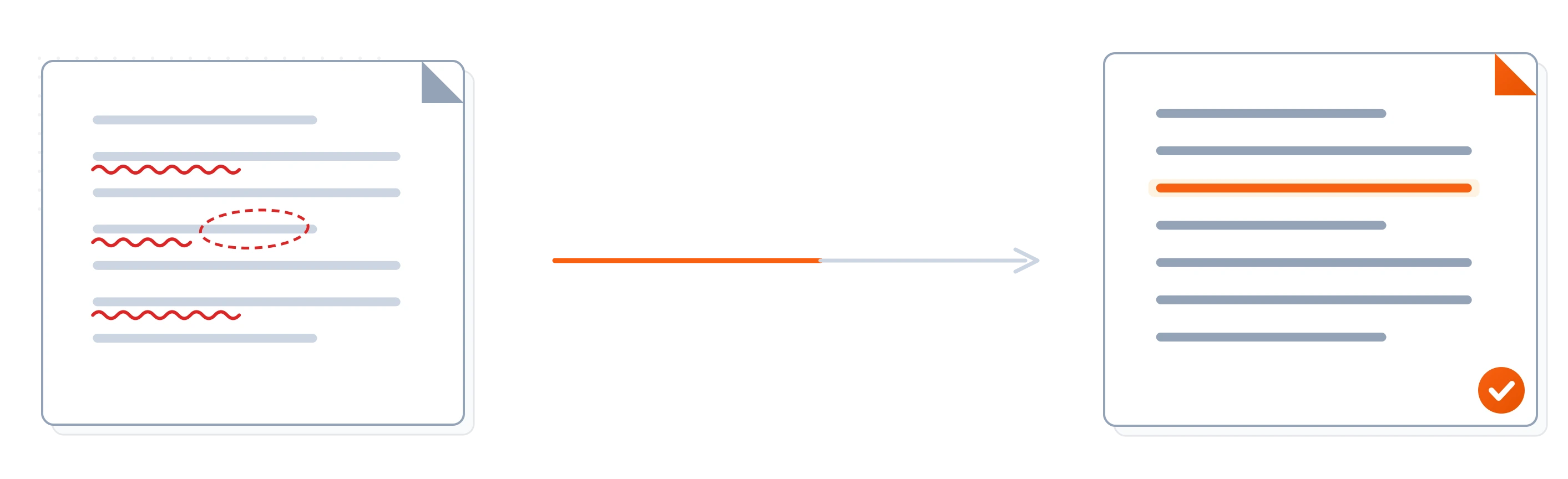
The industry splits post-editing into two service levels, and the difference decides both the price and what the finished text reads like. The split is codified in ISO 18587, the international standard for post-editing of machine translation output: it defines light post-editing as producing a merely comprehensible and accurate text, and full post-editing as producing output comparable to human translation, and it requires post-editors to be qualified translators rather than casual reviewers. Our two service levels follow those definitions.
Light post-editing makes the machine output accurate and understandable, nothing more. The editor corrects mistranslations, fixes anything misleading, restores dropped negations and numbers, and repairs grammar that blocks comprehension. Awkward but correct phrasing is left alone. The result is fit for internal circulation: meeting notes, support macros, knowledge-base drafts, correspondence where the reader just needs to know what was said.
Full post-editing takes the same output to publishable quality. On top of accuracy, the editor rewrites unnatural phrasing, enforces your terminology and register, fixes consistency across the whole document set, and formats numbers, dates and units for the target market. The result should be indistinguishable from human translation to a normal reader. Product content, published articles and customer-facing help centres sit here.
The honest guidance: if a text is worth publishing under your brand, it is worth full post-editing. If it only needs to be understood internally, light post-editing saves the difference. We quote both levels so you can see the gap before deciding.