What "certified" means in the UK — and what makes one accepted vs rejected
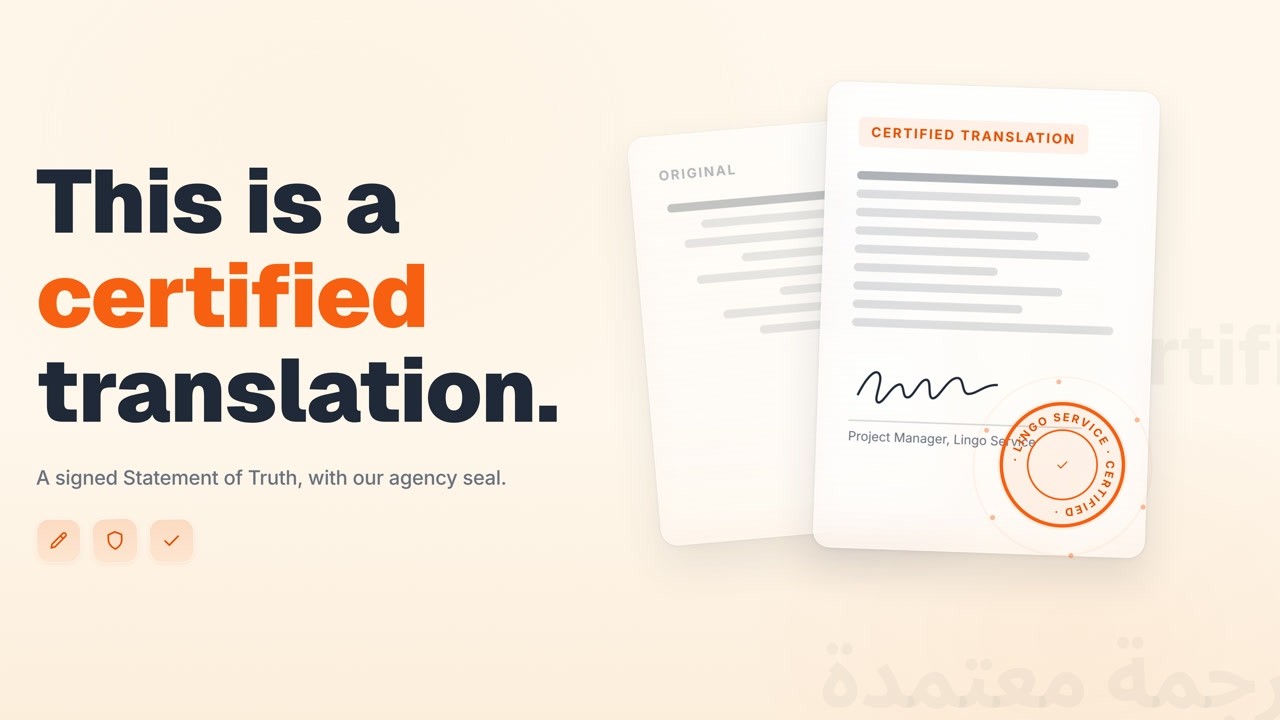
A UK certified translation is a translation accompanied by a signed Statement of Truth from a qualified translator or an accredited translation agency, confirming the translation is a true and accurate rendering of the original document. It is the format every UK authority asks for when a document is in a language other than English or Welsh. It does not need to be sworn or notarised for UK domestic use — those concepts come from civil-law countries and are imported only when a document is destined for use abroad.
The minimum elements UK authorities require
A certified translation that will be accepted by UK courts, registry offices, universities, HMRC, banks and professional regulators must include, at minimum, six elements. We include all of them on every translation we issue, regardless of which body the client is submitting to.
- A signed Statement of Truth. The exact wording our certificates use: "I confirm that this is a true and accurate translation of the original document into English." Signed by the translator or, in the case of an accredited agency, by an authorised representative.
- The translator's full name and qualifications. A surname-initial does not count. Receiving authorities want a name they could in principle contact and a qualification they can verify (MITI, DPSI, NRPSI, or equivalent academic qualification with documented experience).
- The agency name and registered address. A PO box is not enough. Lingo Service Translations Ltd, with our Cardiff registered office on every certificate.
- The agency's accreditation references. We cite our ITI corporate member reference and our ISO 17100 accreditation reference, both verifiable on the relevant register.
- The date of translation. Some receiving authorities reject certificates older than three months; we always issue with the current date and reissue free of charge when an older certificate is no longer accepted.
- The source attached. The certified translation is issued as a single combined PDF containing the source scan and the translation, so the receiving authority can confirm the source matches what they have.
Why "certified" in the UK is different from elsewhere
England, Wales, Scotland and Northern Ireland have no sworn-translator system. There is no government register of authorised translators the way Spain, France, Italy and Germany maintain. Instead, the UK relies on professional accreditation (ITI, CIOL) and on quality standards (ISO 17100, ATC). A certified translation by a qualified translator at an accredited agency is the accepted form. When clients ask us for a "sworn" translation, what they usually mean is one of three things:
- Sworn for foreign use. The document is going to a country that requires sworn translation. We arrange this by routing through a partner sworn translator registered in the destination country.
- Notarised. A notary public has confirmed the translator's identity and signature. We arrange this for clients submitting to countries that require it; UK domestic use rarely needs it.
- Apostilled. The Foreign, Commonwealth and Development Office (FCDO) has added an apostille stamp under the Hague Convention. The apostille goes on the notary's signature, not on the translation. Required for some destination countries; never required for UK domestic use.
The five most common reasons a certified translation gets rejected
We see rejected certifications when clients have used unaccredited translators, freelance bilinguals or family members. The rejections we see most often, in order:
- No verifiable translator qualification. "Sarah, native speaker, has translated this" is not a qualification. Receiving authorities look up the translator on the ITI or CIOL register; if there is nothing to find, the certificate is rejected.
- Missing Statement of Truth. A translator's signature without a clear statement that the translation is true and accurate is not a certification — it is just a signed translation.
- Wrong format. The translation is delivered as a Word document with no source attached. UK authorities want a single PDF with source and translation visible side by side.
- Source mismatch. The translator certified a translation from a photocopy of a photocopy, with critical text illegible. The certificate cannot truthfully say "true and accurate" if half the original is unreadable.
- Translator translated their own document. Translators cannot certify translations of their own personal documents — the receiving authority will reject the obvious conflict of interest.
Every certified translation we issue is checked against this list before release. If your previous translation was rejected, send it to us along with the rejection letter; we will tell you which of the five caused it.