Order online 24/7: instant quote in seconds
Netflix & Amazon Prime Spec

Streaming-Grade Subtitling & Captioning

Subtitling that survives the whole workflow: timed, translated captions in SRT, WebVTT or broadcast STL, produced by native speakers in 260+ languages.

14
Years Experience
50,000+
Documents Translated

Last updated

Why Lingo Service
  • Working in conformity with ISO 17100 and an ITI corporate member
  • 260+ languages, native qualified linguists
  • Certified translation from £35, transparent pricing
  • Same-day return available on weekdays
  • GDPR-compliant, files stored in the UK
What we do

Specialist capabilities for Streaming-Grade Subtitling & Captioning

Feature Films & Documentaries

Cinema and documentary subtitling: accurate timecoding, cultural adaptation, multiple language tracks, broadcast standards

TV Programmes & Series

Television subtitling: episode-by-episode consistency, broadcast compliance, multiple episodes handling

Online Video Platforms

YouTube, Vimeo, social media: SRT/VTT formats, burned-in subtitles, multi-language support

E-Learning & Training Videos

Educational content: clear readability, appropriate pacing, accessibility compliance for learning materials

Corporate Videos & Webinars

Business content: professional subtitling, live event captioning, on-demand subtitles

Live Events & Streaming

Real-time captioning: conferences, webinars, live broadcasts, streaming platforms

Welsh-language subtitling, from the city where Welsh is a working language

Welsh subtitling is a genuine niche, and it is ours by geography. We are a Cardiff agency with a Welsh team working under the same roof as our certified translation practice, which is why public bodies and producers come to us when the deliverable is Cymraeg on screen.

The demand is structural, not seasonal. S4C is the UK's only Welsh-language public service broadcaster, and Ofcom's 2025 access-services list places it at Level Two: 66 per cent of programming subtitled, with full requirements for signing and audio description. Anyone supplying S4C, or clipping its output for other platforms, needs Welsh subtitles produced and checked by people who actually read Welsh.

Public bodies in Wales carry their own duties. The Welsh Language Standards, made under the Welsh Language (Wales) Measure 2011 and enforced by the Welsh Language Commissioner, require councils, national parks and the Welsh Ministers to publish documents, websites, apps and publicity in Welsh, treating Welsh no less favourably than English. The standards name documents and digital content rather than subtitles specifically, but in practice a public body publishing video meets them with Welsh-language versions and captions, and that is the work we deliver: translation into natural Welsh by our Welsh linguists, timed and formatted to your spec.

What Ofcom expects of broadcasters, and what that means for your captions

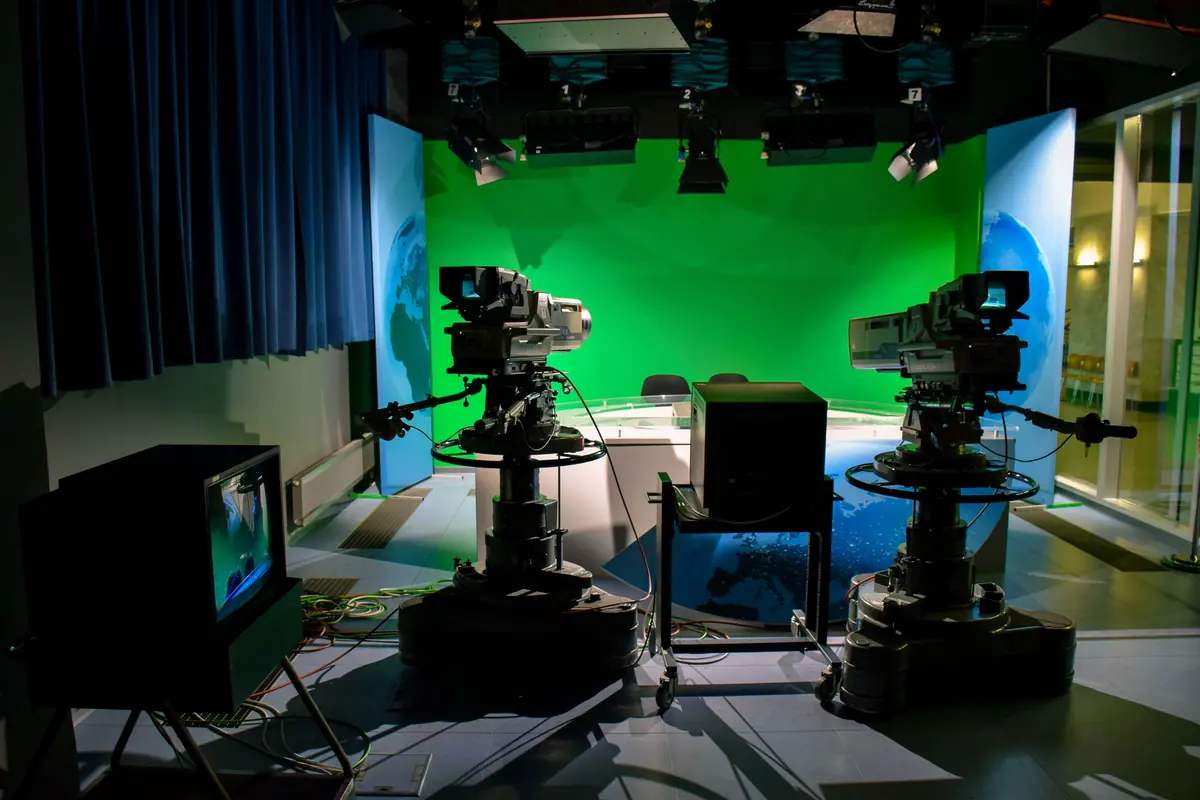
Subtitling on UK television is not optional. Ofcom's Code on Television Access Services requires most licensed channels to subtitle 80 per cent of their programmes, rising to 90 per cent for ITV1 and Channel 4 and 100 per cent for the BBC's channels, alongside audio description on 10 per cent and sign interpretation on 5 per cent. In 2025, 83 Ofcom-licensed channels carry access-service requirements; only channels with under 0.05 per cent of UK viewing are exempt.

For production companies this flows downstream: if your programme, advert or corporate film is heading to a broadcaster or a platform with access requirements, captions are part of the deliverable, and rejected caption files mean missed slots. We deliver subtitle files timed to broadcast conventions, proofread by native speakers of the subtitle language, in the format your post-production chain specifies, and when the same film needs English, Welsh, Arabic and Polish versions, all four come from one supplier with consistent timing.

Formats that survive the workflow: SRT, WebVTT, STL and EBU-TT

A subtitle job is only finished when the file loads. We deliver the four formats that cover almost every pipeline:

  • SRT (SubRip), the universal exchange format: numbered cues, an in and out timecode, the subtitle text. Accepted by YouTube, Vimeo, LinkedIn, most players and most NLEs.
  • WebVTT, the W3C standard for the web: the format HTML5 video uses through the track element, for captions, subtitles and chapter markers on your own site.
  • STL (EBU Tech 3264), the long-standing broadcast subtitle exchange format that playout chains still ask for.
  • EBU-TT (Tech 3350), the XML-based successor used in modern broadcast and online delivery.

Closed captions can be switched on and off by the viewer; open captions are burned into the picture and cannot. We produce both, and for right-to-left languages such as Arabic, where line breaks and punctuation reverse, the file is checked by a native reader before delivery, because an RTL subtitle file that renders backwards is the most common caption failure we are asked to repair.

How it works

Our process, end to end

  1. 1

    Transcription

    Transcribe source audio: verbatim transcription, speaker identification, timestamp creation

  2. 2

    Translation & Adaptation

    Translate and adapt for subtitles: concise phrasing, cultural adaptation, natural spoken style

  3. 3

    Timecoding & Synchronisation

    Sync subtitles to video: frame-accurate timing, on-screen/off-screen cues, reading speed optimisation

  4. 4

    Formatting & Styling

    Format for platform: SRT, VTT, broadcast formats (STL, PAC), styling, positioning

  5. 5

    Quality Assurance

    Review accuracy, timing, readability: linguistic review, technical check, platform testing

  6. 6

    Delivery

    Deliver subtitle files: multiple formats, burned-in options, multiple language tracks as requested

Who we serve

Built for these teams

Entertainment & Media

  • Feature films and cinema releases
  • TV programmes and series
  • Documentaries and factual content
  • Streaming platform content (Netflix, Amazon Prime)
  • Online video platforms

Education & E-Learning

  • E-learning courses and training videos
  • Educational content and tutorials
  • Academic lectures and presentations
  • Training materials with accessibility requirements

Corporate & Business

  • Corporate videos and presentations
  • Webinars and online events
  • Marketing and promotional videos
  • Internal training content
  • Live event captioning
Why teams pick us

What you get with Lingo Service

Platform-spec compliance out of the box

Netflix TTML, Amazon Prime Video SRT, Disney+ IMSC, YouTube VTT, broadcast STL/PAC. We know what each platform rejects and why - your delivery passes QC the first time.

Tracked from transcription to master

Every step logged in LingoSecure - transcription, translation, timecoding, QA, client review. Rights clearance, revisions and sign-off all audited. GDPR-compliant.

Arabic, RTL & MENA done natively

Right-to-left rendering, bidirectional mixing, Arabic dialect accuracy, cultural adaptation for MENA audiences. We ship the Arabic work that other UK vendors subcontract.

SDH & accessibility as standard

Sound descriptions, speaker identification, music cues, CEA-608/708 support. Accessibility compliance built in, not charged as an extra.

FAQ

Frequently asked questions

What subtitle formats do you provide?
We provide SRT (SubRip, most common), VTT (WebVTT for web video), SSA/ASS (styling support), and broadcast formats (STL, PAC) for television. We also offer burned-in subtitles (MP4 overlay) and custom formats for specific platforms. Format selection depends on platform requirements (YouTube uses SRT, Netflix requires specific formats, broadcast needs STL/PAC).
How much does subtitling cost?
Subtitling priced per minute of video, typically £8-£15 per minute depending on language, complexity, and format requirements. Rush service (+50% surcharge) available for urgent deadlines. Live captioning priced separately. SDH (Subtitles for Deaf and Hard of Hearing) may incur additional charges. Get instant quote with video details.
Can you subtitle live events and streaming?
Yes - we provide live captioning and subtitling for conferences, webinars, live broadcasts, and streaming events. Real-time captioning requires experienced captioners, low latency technology, and appropriate setup. Live captioning priced separately from pre-recorded subtitling. Advance notice required for live event setup.
Do you handle SDH (Subtitles for Deaf and Hard of Hearing)?
Yes - we create SDH subtitles including sound descriptions (music, sound effects, speaker identification). SDH subtitles provide accessibility for deaf and hard-of-hearing audiences, meeting accessibility compliance requirements. SDH includes: dialogue transcription, speaker identification, sound descriptions, music descriptions. SDH may require additional time and cost.
What reading speed do you use for subtitles?
We follow broadcast standards: 160-180 words per minute for optimal readability. Reading speed adjusted based on content type: faster-paced content may allow slightly higher speeds, educational content may require slower speeds. Character-per-line limits followed (typically 42 characters per line, 2 lines maximum). Reading time ensures viewers can comfortably read subtitles without missing visual content.
How long does subtitling take?
Standard subtitling: 2-3 business days per hour of video (depending on language and complexity). Rush service: 24-48 hours (+50% surcharge). Timeline includes transcription, translation, timecoding, formatting, and quality review. Multiple languages add time proportionally. Live captioning requires advance setup and real-time delivery.
Can you handle multiple languages for the same video?
Yes - we create subtitles in multiple languages for the same video. Each language requires separate translation and timecoding, but we maintain consistency in timing and style across languages. Multiple language tracks delivered as separate files or combined format. Volume discounts available for multiple languages. Subtitling training videos? Our e-learning translation services cover full course localisation including subtitles.
Do you provide burned-in subtitles (hardcoded)?
Yes - we provide burned-in subtitles (hardcoded into video) in addition to separate subtitle files. Burned-in subtitles ensure subtitles always display (useful for social media, some platforms). We deliver both: separate subtitle files (SRT, VTT) for flexibility and burned-in video files (MP4) for platforms requiring embedded subtitles.
Can you subtitle content with on-screen text?
Yes - we handle on-screen text (titles, captions, graphics) by either translating and recreating on-screen text or providing subtitle alternatives. On-screen text handling requires video editing capabilities and may incur additional charges. We discuss approach with clients: recreate graphics, provide subtitle translations, or combination approach.
What languages do you offer subtitling in?
We offer subtitling in 50+ languages including all major European languages (French, German, Spanish, Italian, Portuguese), Asian languages (Chinese, Japanese, Korean), Middle Eastern languages (Arabic, Persian, Urdu), and other languages. Native linguists translate and adapt subtitles ensuring cultural accuracy and natural phrasing. Less common languages may require additional time.

Ready to talk?

Upload your files for an instant quote, or talk to our UK team about your documents.

Home Office Approved
Available 24 Hours
ITI Corporate Member
Lingo Pro

Lingo Pro

Online

Hey! I'm Lingo Pro. Ask me anything about translations, pricing, or turnaround times - I speak many languages!